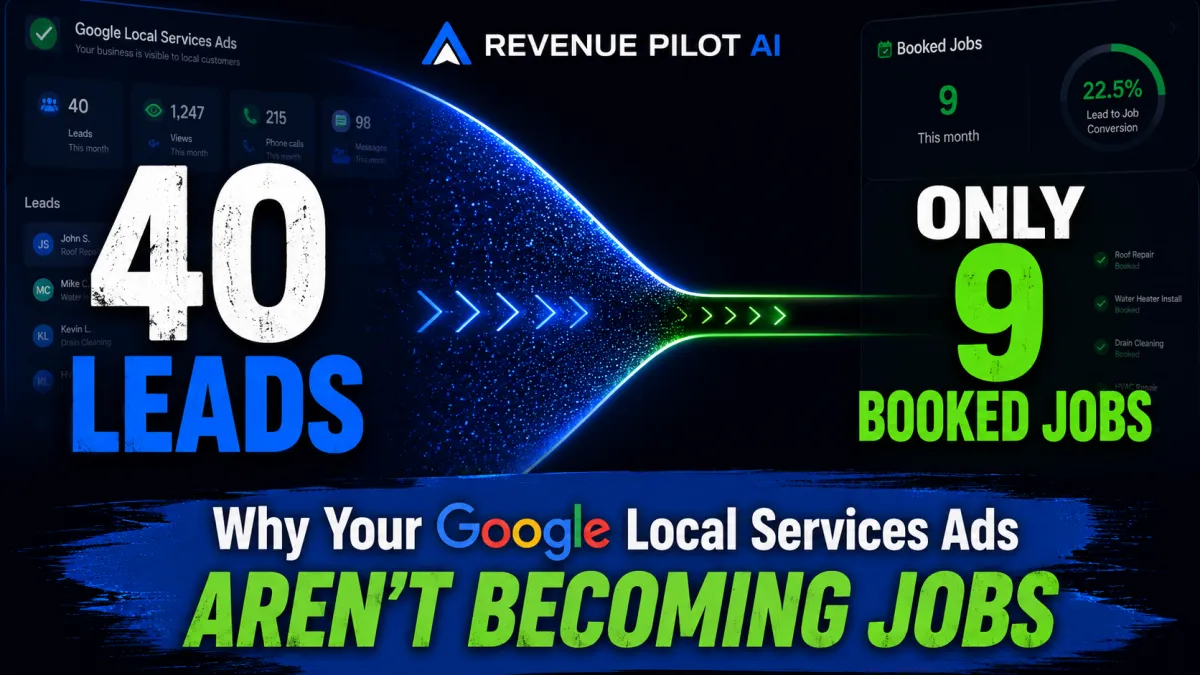
Google Local Services Ads: Why You're Getting Leads But No Booked Jobs
Google Local Services Ads: Why You're Getting Leads But No Booked Jobs
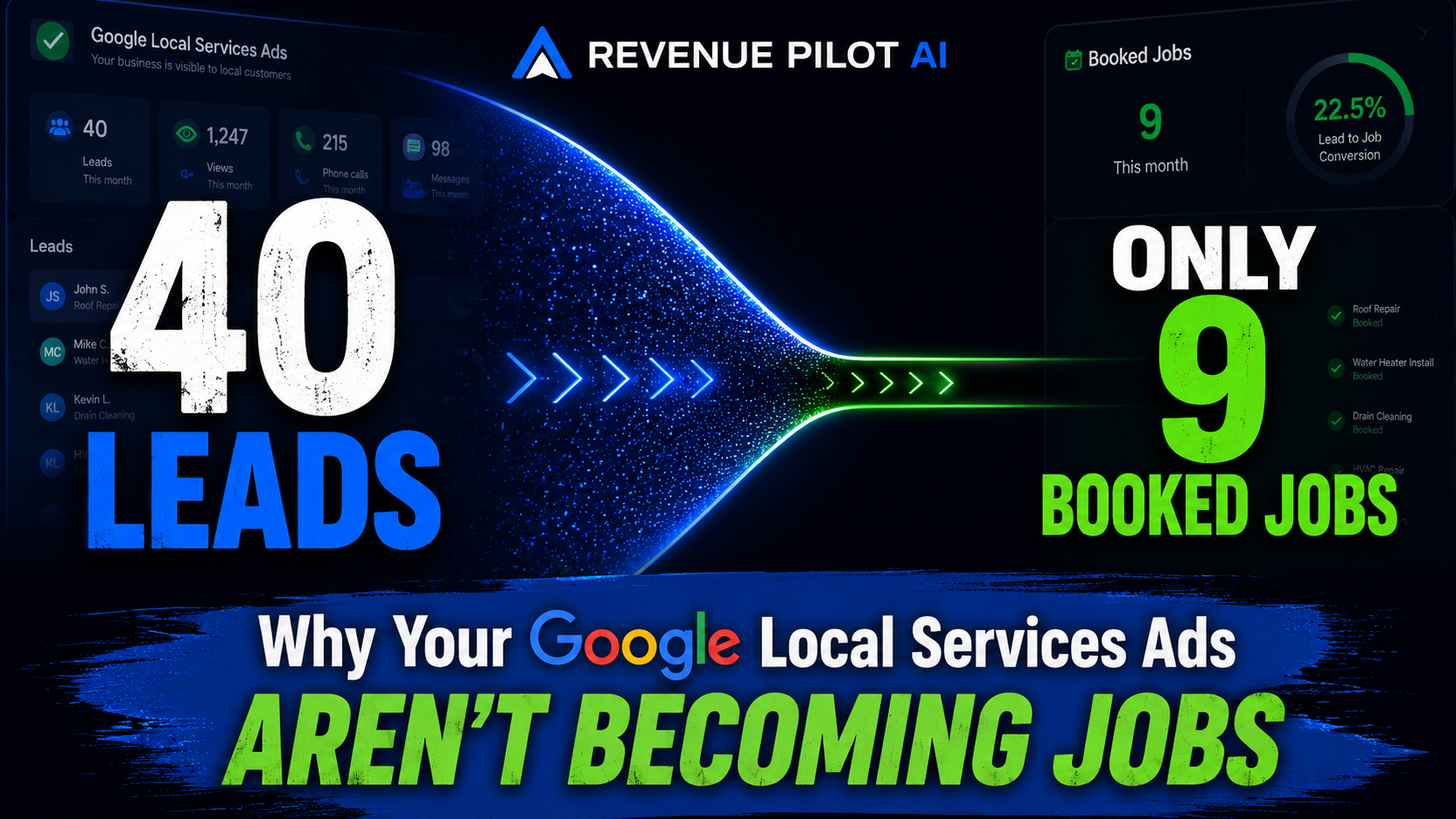
Your Google Local Services Ads dashboard says the campaign is working. The phone is ringing. Leads are coming in. Cost per lead may even look reasonable.
Then you check the schedule and the numbers tell a different story.
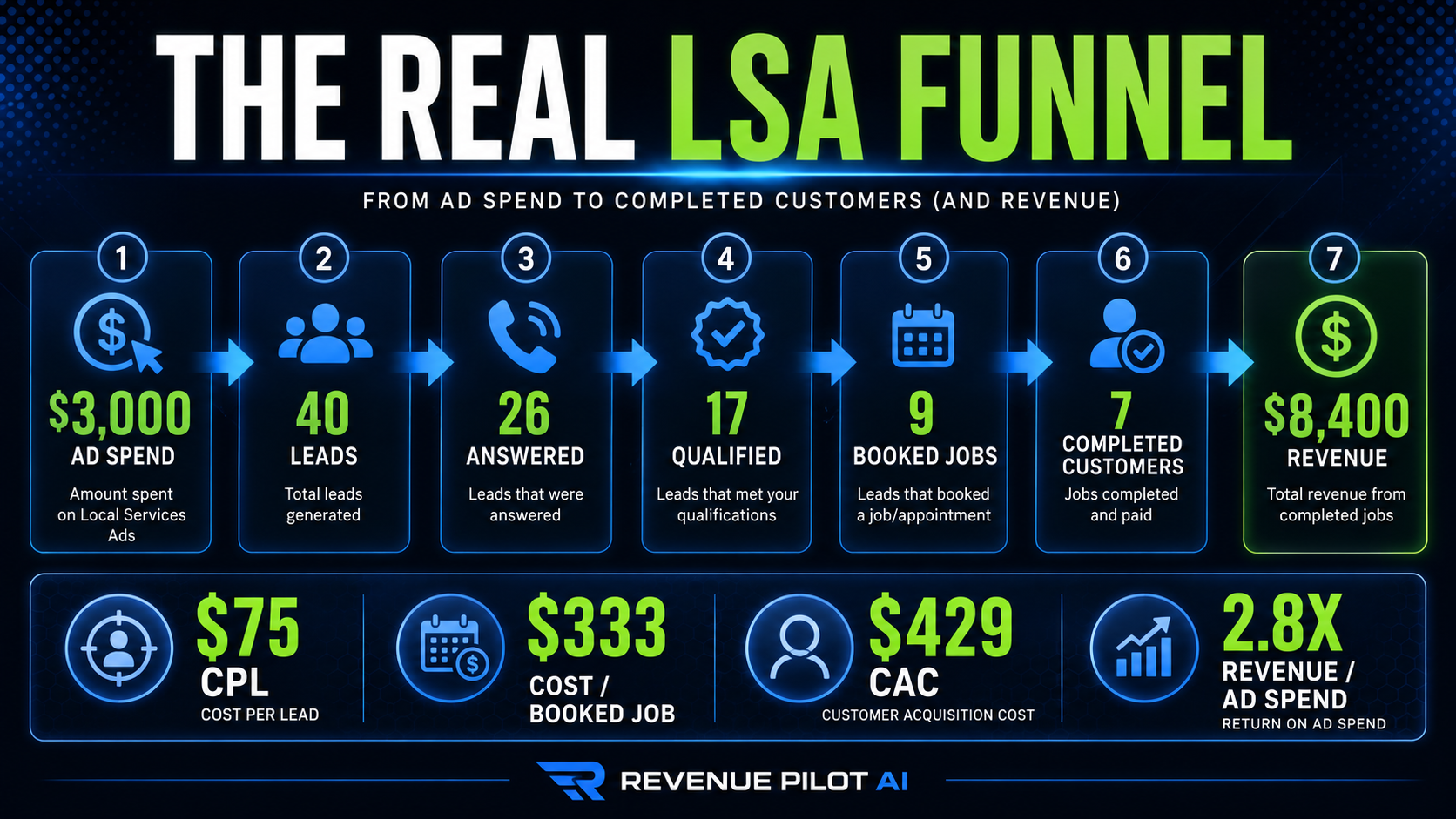
Imagine an HVAC company spends $3,000 and generates 40 Local Services leads. On the surface, that is a $75 cost per lead. But only 26 leads are answered, 17 are legitimate opportunities, 9 become booked jobs, and 7 become completed customers. Those seven customers produce $8,400 in revenue.
The campaign did generate leads. The problem is that lead volume is only the top of the funnel. A contractor gets paid at the bottom.
That difference is the reason some Local Services Ads accounts look healthy in Google while the owner still feels like the advertising is not producing enough jobs. The right question is not, 'How many leads did Google send?' The better question is, 'How much profitable business survived the entire funnel?'
The funnel to track
Lead → Answered conversation → Qualified opportunity → Booked job → Completed customer → Revenue
The LSA economics contractors should actually see
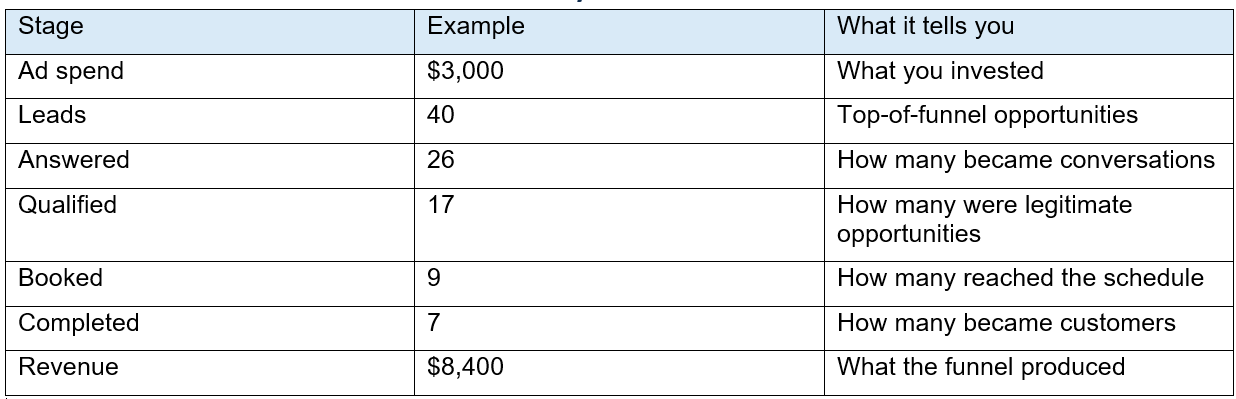
From those numbers:
·Cost per lead = $3,000 ÷ 40 = $75
·Cost per booked job = $3,000 ÷ 9 ≈ $333
·Customer acquisition cost = $3,000 ÷ 7 ≈ $429
·Revenue-to-ad-spend = $8,400 ÷ $3,000 = 2.8x
Those numbers tell a much more useful story than CPL alone. Now let’s look at the seven places where the economics commonly break.
1. Treating a lead like a win
A Local Services lead is not a customer. It is not a booked job. It is not revenue. It is an opportunity to start a conversation.
That distinction matters because a dashboard can make 40 leads look like 40 successful outcomes when the business may only finish seven jobs. If you stop measuring at the lead, you are measuring the handoff instead of the outcome.
This is why cost per lead is useful but incomplete. A $75 CPL may compare favorably with another channel, but it says nothing about whether the lead was answered, qualified, booked, completed, or profitable.
2. Missing the calls you already paid for
One of the most expensive failures happens after Google has already done the hard part. A homeowner sees the ad, chooses the business, and calls. Then nobody answers.
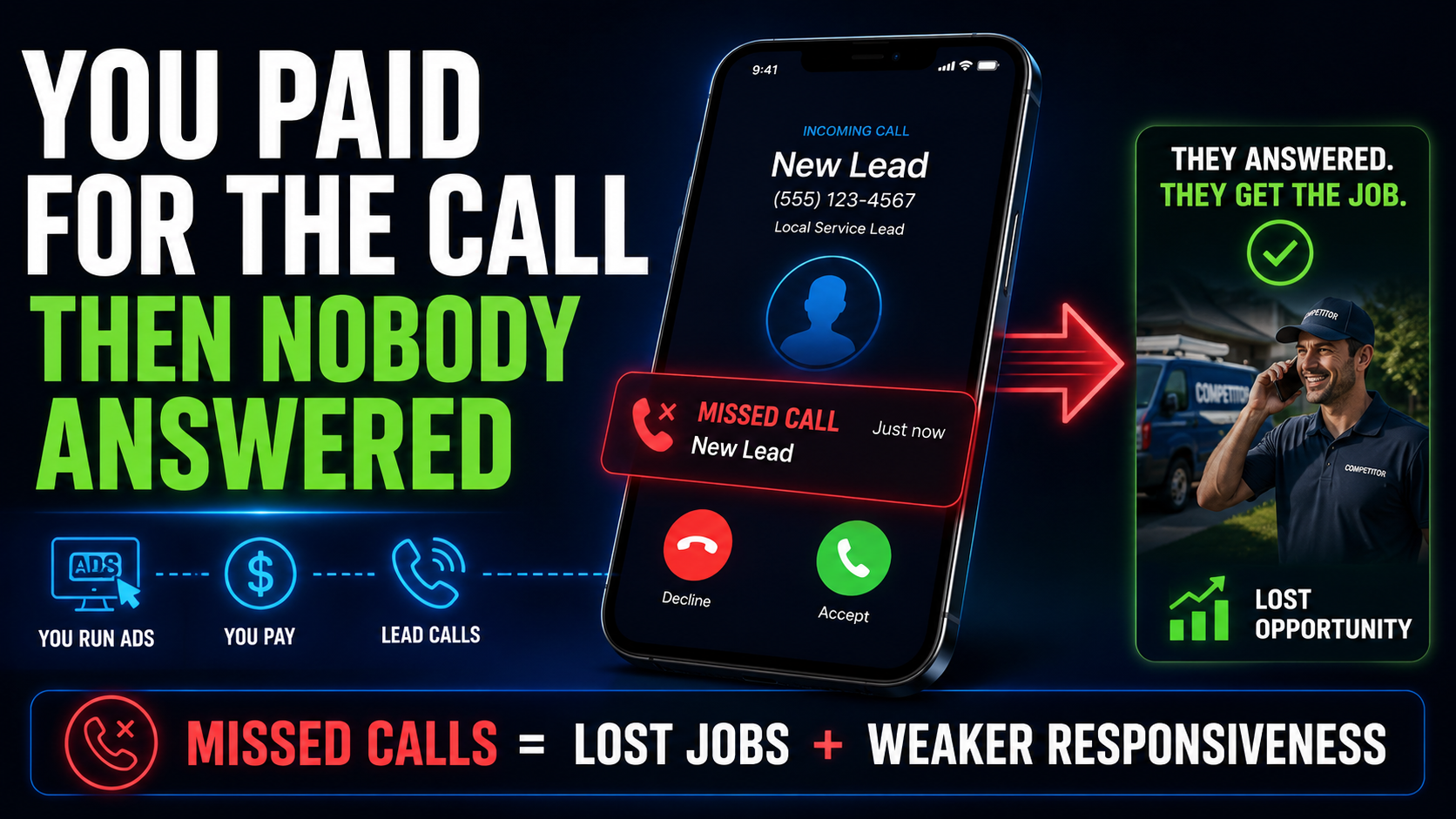
For urgent HVAC, plumbing, electrical, roofing, and other home-service needs, the customer is usually committed to solving the problem—not to waiting for one particular contractor. If the first business sends the call to voicemail, the customer may simply call the next provider.
That creates two potential losses: the job you never got to quote, and weaker responsiveness. Every paid lead needs a handoff, whether that is a live CSR, an answering service, an AI receptionist, an instant text response, or a rapid callback process.
3. Targeting job types you do not really want
More eligibility can create more lead volume, but more lead volume is not automatically better business.
An HVAC company may be technically capable of handling dozens of service types while only a smaller group consistently produces the tickets, close rates, and margins the company wants. If low-value or bad-fit services stay enabled, budget can be spent on leads the company never wanted in the first place.
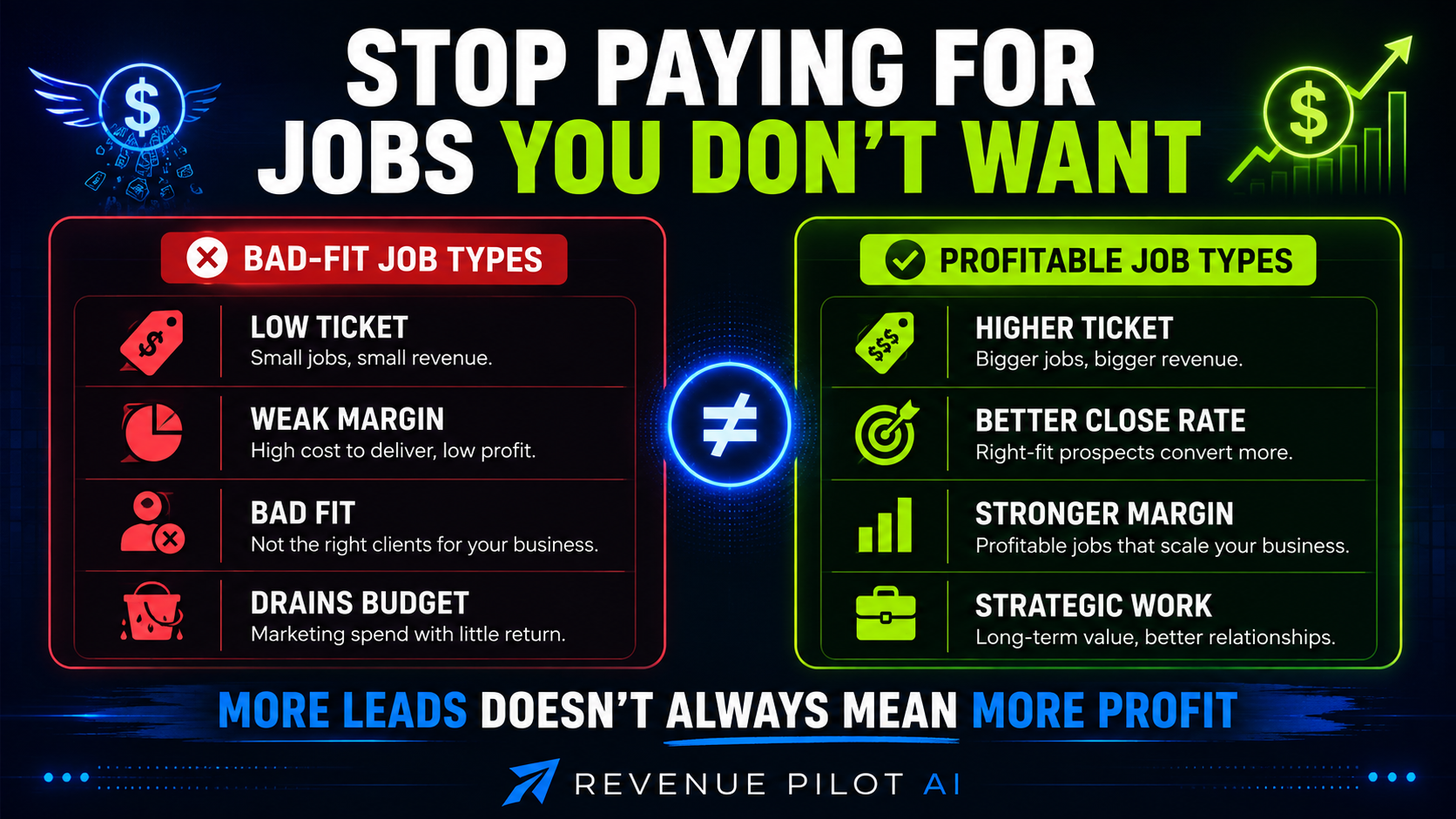
A lead can be valid and still be a poor economic fit. Review job types by actual business value: average ticket, close rate, gross margin, staffing fit, seasonality, and strategic importance.
4. Treating the service area like a bragging contest
Being able to serve an area does not mean it is equally profitable to advertise there.
Consider a service call 42 miles away that produces a $250 ticket. Add windshield time, fuel, technician availability, and the opportunity cost of keeping that technician away from denser areas. Now compare it with a customer 10 miles away with a $900 average ticket and a higher close rate.
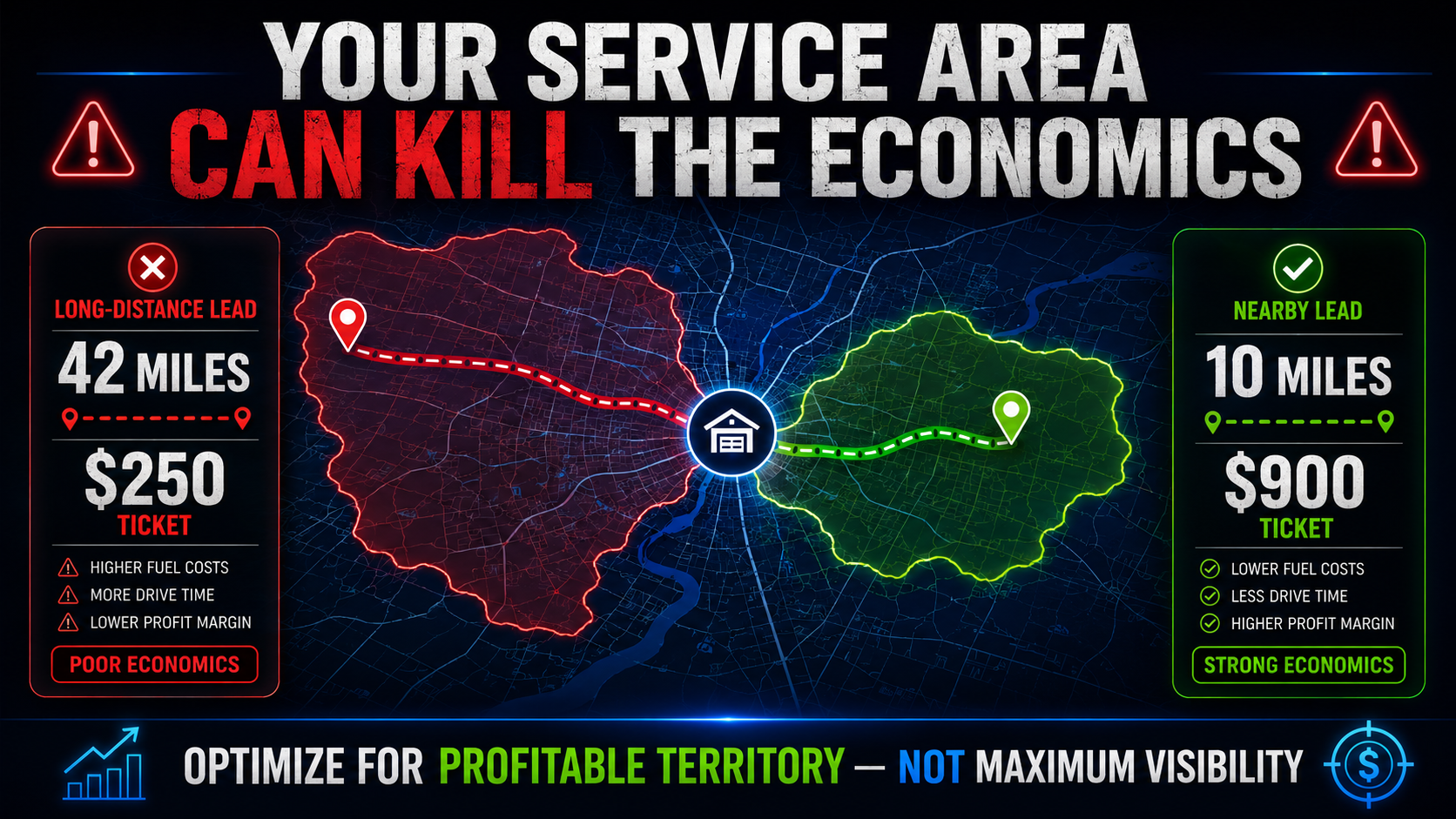
Both may be valid customers inside the service area, but the economics are completely different. Optimize territory around profitable customers—not simply maximum visibility.
Before you increase your LSA budget, run the numbers on the leads you already have. Track answered calls, booked jobs, completed customers, and revenue so you can see where the funnel is actually leaking.
5. Assuming a higher bid fixes a weak account
When lead volume falls, the instinct is often to raise the bid or budget. But Local Services Ads are not simply a highest-bid-wins system.
Bid competitiveness matters, but so do the quality and relevance signals around the provider: responsiveness, relevance to the search, services offered, reviews, rating, profile information, images, verification, and other factors that influence whether users are likely to choose the business.
A bigger bid cannot permanently compensate for a weak customer experience. Fix the account and the funnel, not just the bid.
6. Forgetting that showing up is not the same as getting chosen
Visibility gets the business into the consideration set. Reputation helps convert that visibility into a call, message, or booking.
Imagine one provider has a 4.2 rating and 29 reviews while another has a 4.9 rating and 186 reviews. Even if both appear, customers still make a choice. Star rating, review volume, profile completeness, trust, and the quality of the business presence can influence who gets the call.
This is also where Google Business Profile and Local Services Ads connect. The reputation a contractor builds on Google can follow the customer into the Local Services experience.
7. Measuring CPL instead of customer economics
The biggest reporting mistake is stopping at cost per lead.
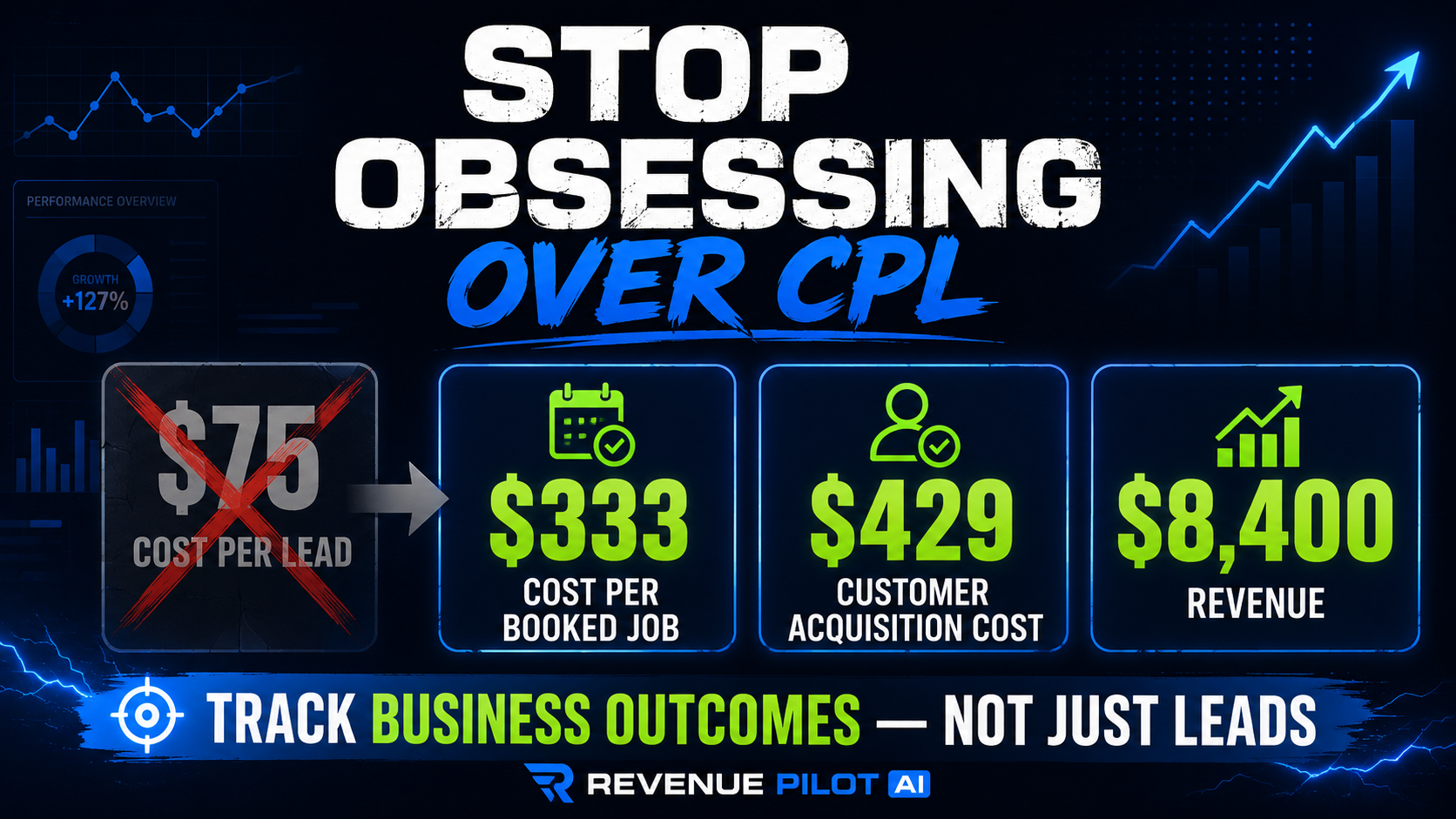
In the example above, $75 CPL sounds efficient. But the same $3,000 in spend produced nine booked jobs, which means roughly $333 per booking. It produced seven completed customers, which means about $429 in acquisition cost per customer.
If those customers generate $8,400, the campaign produces 2.8 dollars in revenue for each ad dollar. That still does not automatically mean the campaign is profitable—labor, materials, overhead, callbacks, and gross margin still matter—but now you finally have numbers that can be compared with the economics of the business.
The order I would fix an underperforming LSA account
1. Answer every paid lead quickly. Do not let paid opportunities die at voicemail. Build a defined handoff process for business hours and after hours.
2. Review job types. Keep the services that support the work you actually want to grow. Reduce exposure to work that consistently produces weak economics.
3. Review territory economics. Judge areas by close rate, average ticket, drive time, margin, and technician capacity—not just by whether you can physically serve them.
4. Strengthen reputation. Improve the review profile, rating, profile completeness, information quality, and trust signals customers use to compare providers.
5. Track business outcomes. Measure qualified opportunities, booked jobs, completed customers, cost per booked job, customer acquisition cost, and revenue.
Bottom line
The goal of Local Services Ads is not a prettier lead dashboard. The goal is more profitable jobs.
LSA Profitability Checklist
☐ How much did we spend?
☐ How many leads did we receive?
☐ How many were answered?
☐ How many were qualified opportunities?
☐ How many booked?
☐ How many completed?
☐ What was the cost per booked job?
☐ What was the customer acquisition cost?
☐ What revenue came from completed customers?
☐ Which job types had the best close rate and margin?
☐ Which service areas had the best ticket size and economics?
☐ How many paid calls were missed or followed up too slowly?
☐ How does our rating and review profile compare with competing providers?
☐ Are we changing bids/settings too frequently to evaluate results cleanly?
What to do next
Before increasing your LSA budget, calculate what the current funnel is actually producing. If more lead volume is entering a broken process, spending more can simply make the leak more expensive.
Use the checklist above to identify whether the problem is lead handling, job-type targeting, service-area economics, reputation, bidding expectations, or the way performance is being measured.
For the full visual walkthrough, watch the Revenue Pilot AI video: “Google Local Services Ads: Why You’re Getting Leads But No Booked Jobs.” If you want the profitability checklist from the video, use the comment keyword “LSA.”
Want the profitability checklist used in the video? Watch the full Revenue Pilot AI breakdown, “Google Local Services Ads: Why You’re Getting Leads But No Booked Jobs,” and use the comment keyword “LSA.”
FAQ Section
Are Google Local Services Ads worth it for contractors?
They can be, but lead volume alone is not enough to judge the channel. Contractors should evaluate cost per booked job, customer acquisition cost, completed jobs, revenue, and margin to determine whether the campaign works for their business.
What is a good cost per lead for Google Local Services Ads?
There is no universal CPL that guarantees profitability. A lead cost that looks inexpensive can still be poor if the business has a low answer rate, weak qualification, low booking rate, or low-margin jobs. Compare CPL with downstream outcomes.
Why am I getting LSA leads but not booked jobs?
Common causes include missed calls, slow follow-up, low-quality or bad-fit job types, weak territory economics, low close rates, and reputation problems that reduce customer selection.
Should I increase my LSA bid to get more leads?
A higher bid may improve competitiveness, but it does not fix weak responsiveness, poor targeting, weak reputation, or bad economics. Diagnose the funnel before treating bid increases as the default solution.
What should contractors track besides cost per lead?
At minimum: answered leads, qualified opportunities, booked jobs, completed customers, cost per booked job, customer acquisition cost, revenue, average ticket, close rate, and ideally gross profit by job type and territory.
Can a valid LSA lead still be a bad lead?
Yes. A lead can match the selected service and still be a poor fit because of low ticket size, distance, weak margin, low close probability, or operational constraints.
How does reputation affect Local Services Ads?
Being visible does not guarantee being chosen. Customers can compare providers, and stronger ratings, review volume, complete information, and trust signals can improve conversion from visibility to contact.
How often should I change my LSA settings?
Avoid reacting to every daily fluctuation. Make deliberate changes, track the results, and allow enough time for performance to stabilize before making another major adjustment.


